Carpenter ant remediation treats living spaces compromised by structural excavation, stopping the quiet chewing sounds that disturb sleep in older properties across Midtown, Cooper-Young, and Central Gardens. Unlike…
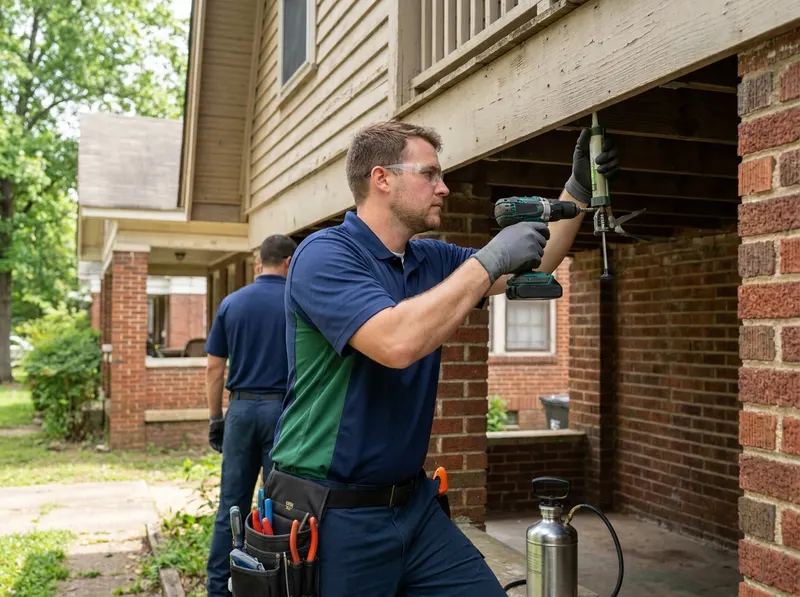
Carpenter ant remediation treats living spaces compromised by structural excavation, stopping the quiet chewing sounds that disturb sleep in older properties across Midtown, Cooper-Young, and Central Gardens. Unlike termites that ingest cellulose, carpenter ants excavate galleries along timber grain patterns to house satellite colonies, depositing smooth wood shavings called frass outside baseboards or crawlspaces. ClearHarbor Bug Management uses an integrated harbor-elimination framework calibrated for the Mississippi River basin's heavy ambient humidity. Standard field diagnostics refer to structural guidelines established by the EPA Integrated Pest Management standards to halt structural timber loss without saturating living spaces in airborne chemicals.
When structural wood is compromised, standard broad-spectrum sprays fail because perimeter repellents trap satellite colonies inside wall cavities. Proper remediation requires locating moist framing junctions near window headers, valley rooflines, and plumbing runs. Protocols align with timber assessment standards from the USDA Forest Products Laboratory alongside safety mandates established by the Occupational Safety and Health Administration. Field technicians inspect exterior shade conditions influenced by native canopy species monitored by the Arbor Day Foundation, tracing moisture ingress vectors documented by the Natural Resources Conservation Service across Shelby County soils. For severe structural softening around joists, property owners coordinate repair schedules alongside preservation practices verified by the National Park Service Technical Preservation Services.
Step 1: Visual and moisture mapping scans rim joists, crawlspace sills, and subfloors using non-invasive thermal tools. Step 2: ClearHarbor Bug Management injects targeted, low-toxicity transfer insecticides into identified framing voids, allowing worker ants to carry active ingredients back to the queen. Step 3: Technicians treat exterior foundation interfaces in line with regulatory drift thresholds supervised by the Tennessee Department of Agriculture and runoff limits enforced by the Tennessee Department of Environment and Conservation. Step 4: Technicians isolate external vegetation pathways following urban conservation codes outlined by the Wildlife Habitat Council, matching residential material standards tracked by the U.S. Department of Housing and Urban Development. Homeowners can reach local dispatch directly at (901) 749-8131 for site evaluations.
Every job gets a firm, written price after a free on-site visit.
Tell us about your carpenter ant structural remediation job in Memphis and we'll send a clear, written quote, usually the same day.
 ClearHarbor Bug Management