Residential timber framing and architectural soffits across Midtown and Central Gardens routinely harbor aggressive colonies due to seasonal river-basin humidity. Stinging insect nest removal in Memphis, TN focuses on…
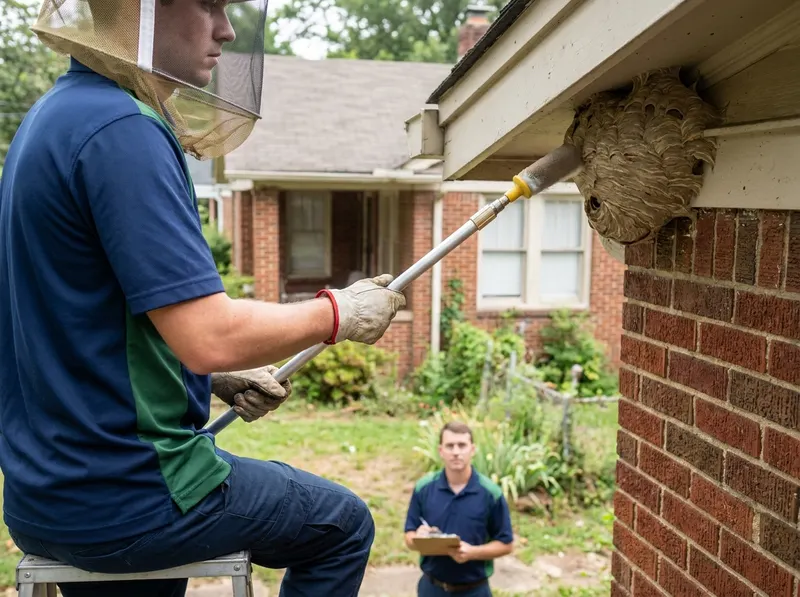
Residential timber framing and architectural soffits across Midtown and Central Gardens routinely harbor aggressive colonies due to seasonal river-basin humidity. Stinging insect nest removal in Memphis, TN focuses on eradicating volatile colonies that compromise family outdoor spaces, porches, and rooflines. Paper wasps (Polistes species) and baldfaced hornets build dense cellulose combs under fascia boards, window crowns, and structural gutters, often reacting defensively to everyday foot traffic. ClearHarbor Bug Management dispatches direct service vehicles equipped with specialized extraction apparatus across Cooper-Young, East Memphis, and Whitehaven. Technicians apply targeted, low-volatility active barriers formulated to knock down defensive colonies instantly without dispersing chemical drift onto children's play sets or domestic animal habitats. Ground-nesting yellow jackets frequently invade subterranean root cavities near landscape edges in Cordova and Raleigh, necessitating targeted injection methods rather than superficial liquid flooding that often triggers structural dispersal.
Effective removal requires distinct protocols tailored to nesting architecture. Visible exterior aerial colonies require physical detachment and surface neutralization using botanical pyrethrin knockdowns followed by synthetic pyrethroid residuals regulated under the EPA pesticide program. Conversely, void-nesting yellow jackets that access wall cavities through mortar joints or weeping vents in Berclair and Binghampton brick veneer demand specialized localized dust injection via directional micro-bulb equipment. Injecting pressurized dusts directly into active voids neutralizes hidden chambers without cutting exploratory drywall holes into finished interiors. Once aerial colonies are rendered inactive, technicians scrape all paper comb anchors down to bare wood or masonry, followed by a targeted application of an aliphatic ester cleaning wash to eliminate the aggregation pheromones that attract returning foundress queens the following spring.
Homeowners weighing DIY hardware-store spray applications against mechanical eradication must account for structural containment and physical sting defense. Off-the-shelf aerosol sprays primarily consist of rapid-evaporating solvents that trigger aggressive alarm pheromone releases, provoking swarms toward nearby occupants while failing to reach deep internal comb tiers. The physical removal protocol isolates the colony within a sealed containment net, physically strips the brood tiers, and screens exterior access cracks exceeding 0.25 inches with copper mesh. Field procedures adhere to safety thresholds aligned with OSHA occupational safety standards and protective handling principles outlined by the National Pest Management Association. Mobile routing operates from decentralized dispatch stages rather than a commercial retail counter, ensuring direct neighborhood deployment. Structural inspections cross-reference seasonal emergence patterns documented by the University of Tennessee Extension and diagnostic guidance from the USDA Agricultural Research Service. For homes adjacent to riparian zones like Overton Park or the Memphis Botanic Garden, nesting pressures peak between late June and October, where unmanaged hives frequently expand to over 1,500 individual workers.
Every job gets a firm, written price after a free on-site visit.
Tell us about your stinging insect nest removal job in Memphis and we'll send a clear, written quote, usually the same day.
 ClearHarbor Bug Management